
Digital Marketing 101 · Step 1 of 5
Step 1 of 5
Digital Marketing Channels: See the Whole Landscape
Digital marketing is not a single tactic. It is a connected system of places where customers discover, evaluate, and respond to your business.
The best strategy does not use every available tool. It selects the channels that match your customers, buying cycle, service area, goals, and budget—then gives each channel a clear job.
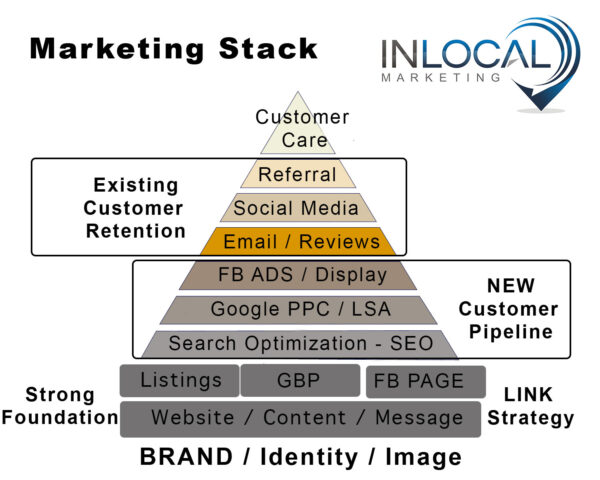
Four Jobs Your Digital Channels Must Perform
The long list of platforms becomes easier to understand when we group them by purpose.
Promotional and Directional Marketing Work Differently
Promotional marketing places your message in front of people to create awareness and interest. Social campaigns, video, display advertising, email, and traditional advertising usually begin with the business reaching toward the customer.
Directional marketing helps customers find a business after a need has already formed. Search engines, map results, reviews, directories, PPC, and Local Services Ads meet the buyer closer to a decision.
Both can matter. But for many local businesses, capturing existing demand is the most direct place to begin because the customer is already looking for help.


Your Website Connects the System
Most digital channels eventually send the customer somewhere: a service page, landing page, contact form, product page, article, map listing, or phone call. Your website is often the place where scattered impressions become a coherent understanding of your business.
That is why channel decisions should not be made independently. Search visibility without a persuasive website wastes opportunity. Advertising without measurement wastes budget. Social activity without a clear destination creates attention without direction.
A cohesive strategy makes each channel strengthen the next.
Digital Marketing 101 · Step 1 of 5

